NASA Revises Lunar Lander Docking Protocols to Resolve Orion Integration Hurdles
New protocols for high-Earth orbit docking and reduced launch requirements for Blue Origin signal a pragmatic shift in NASA's 2028 lunar landing strategy.
By Arjun Patel ·
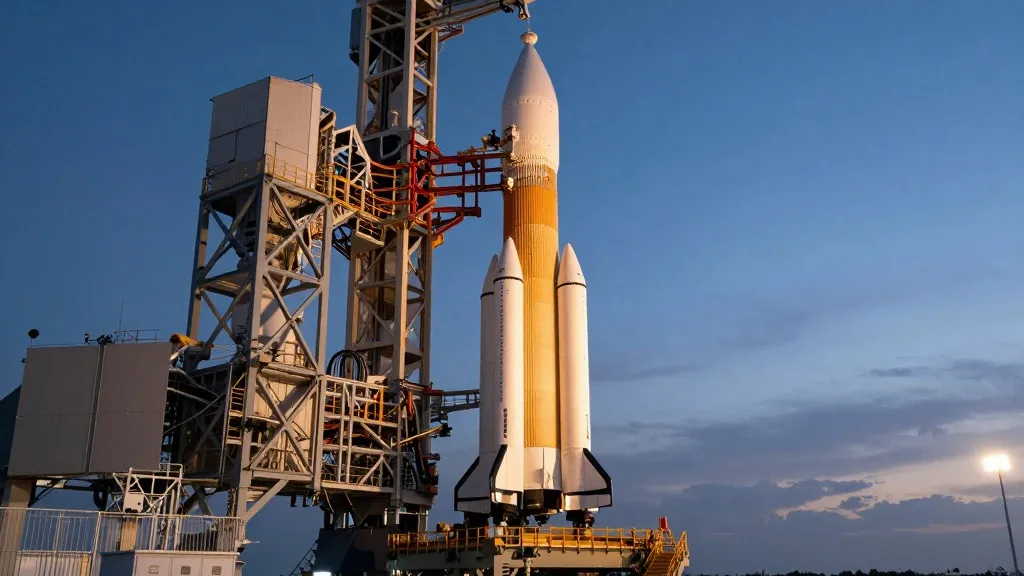
The agency’s roadmap for returning humans to the Moon has undergone a significant structural shift, moving away from earlier conceptual frameworks toward a more pragmatic approach to orbital mechanics. On Friday, NASA held an extensive news conference to detail these revised plans, which aim to facilitate crewed lunar landings as early as 2028 under its Artemis Program.
While various elements of this strategy had been previously rumored or reported by other outlets, this presentation marked the first time NASA formally laid out the specific architectural changes and acknowledged the substantial alterations to how spacecraft will interact in space. The primary objective remains the execution of complex docking procedures and surface operations, but the method for achieving these goals has been re-engineered to address technical bottlenecks that had persisted for years.
A central focus of the updated architecture involves the SpaceX Starship vehicle. Under the new plan, the Orion spacecraft is no longer required to dock with the Starship lunar lander in the complex near-rectilinear halo orbit around the Moon. Instead, the revised protocol dictates that Orion will dock with the Starship lander while both are in high-Earth orbit. This shift allows the combined vehicle to transit to the Moon from a more stable starting point, potentially reducing the energy requirements and technical difficulties associated with the previous orbital maneuvering.
For Blue Origin, the mission architecture presents a different set of logistical challenges. The updated plan calls for four launches of the New Glenn rocket to support the mission. Notably, this configuration eliminates the requirement for spacecraft-to-spacecraft refueling operations. Furthermore, the Blue Origin strategy includes the possibility of its Blue Moon lander rendezvousing with the Orion spacecraft in low-Lunar orbit, offering a distinct pathway for crew transfer that differs from the SpaceX approach.
Regarding the timeline, NASA officials maintained their existing schedule during the presentation. They stated that they continue to anticipate launching the Artemis III mission by the summer of 2027. This specific mission is designed as a demonstration, involving docking operations with both the Blue Moon and Starship vehicles in the vicinity of Earth. Following this demonstration, the agency is still tracking toward a 2028 launch for Artemis IV, which would mark the actual landing of astronauts on the lunar surface.
NASA Administrator Jared Isaacman addressed the audience to express confidence in the revised trajectory. "This is an achievable path we are on right now," Isaacman said. "We have the mandate, we have the resources, and the support from our stakeholders to be able to execute, and that’s what we intend to do." His comments suggest that the agency believes the recent adjustments have sufficiently mitigated the risks that previously cast doubt on the program's feasibility.
The changes reflect a broader effort by NASA leadership to scrutinize every element of the Artemis Program. By seeking to make modifications that help the lunar lander companies execute their plans more efficiently, the agency aims to accelerate the overall timeline. However, the skepticism among observers centers on whether these aggressive dates can be sustained given the historical complexities of spaceflight integration and the sheer scale of the required engineering feats.
The decision to alter the docking orbits was driven in part by specific requests from SpaceX engineers during early 2026 meetings. The company had identified the requirement to dock in the near-rectilinear halo orbit as a significant source of energy consumption and technical difficulty. The cancellation of the Lunar Gateway project earlier this year inadvertently solved this problem for SpaceX, allowing the agency to adopt the simpler high-Earth orbit docking model without losing a critical piece of the lunar infrastructure puzzle.
Source: Ars Technica