Federal Regulators Push for Universal Cyan Lighting on Driverless Cars
The National Highway Traffic Safety Administration proposes a standardized blue-green signal to distinguish autonomous vehicles from human-driven traffic, aiming to reduce confusion on U.S. roads.
By Christopher Reed ·
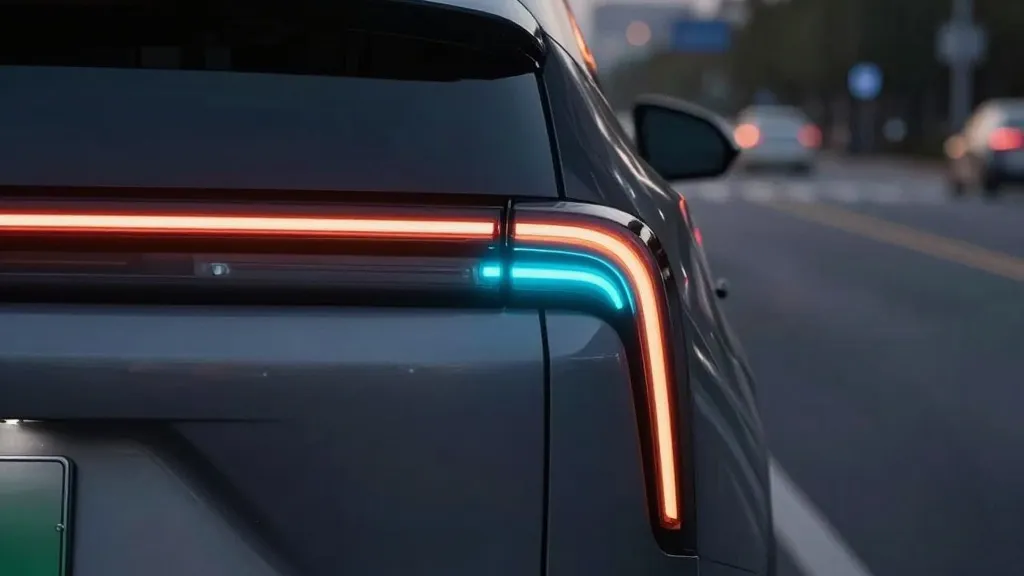
A persistent ambiguity on American roadways is finally meeting a standardized federal solution: the color cyan. For years, the autonomous vehicle industry has struggled to define how driverless cars should communicate their operational status to surrounding traffic, resulting in a fragmented landscape of flashing text, audio cues, and proprietary lighting schemes. The National Highway Traffic Safety Administration (NHTSA) has now stepped in to resolve this tension by proposing a uniform visual signal that explicitly indicates when an automated driving system is in control.
The proposed amendment to Federal Motor Vehicle Safety Standard No. 108 introduces specific requirements for cyan-colored marker lamps. The agency argues that a distinct blue-green hue is necessary to clearly signal to law enforcement and other road users that no human is operating the vehicle. This move represents a significant shift from the current patchwork of state-level approvals and company-specific designs, aiming to create a single, recognizable national standard for robotaxi operators and automakers alike.
The selection of cyan is driven by the need to fill a visual gap in existing automotive lighting protocols. Current industry standards rely heavily on red, amber, white, and flashing blue or red lights for functions such as braking, turn signals, headlights, and emergency services. By introducing a color that is not currently reserved for these critical mechanical or emergency functions, NHTSA seeks to ensure that the autonomous signal does not confuse drivers who are accustomed to interpreting traditional vehicle cues.
While the proposal includes some precedent from state-level trials, such as the turquoise lights approved for Mercedes-Benz’s Level 3 Drive Pilot system, the federal rule aims to broaden adoption. Although Mercedes-Benz has since pivoted toward a Level 2++ system, NHTSA’s objective is to establish a consistent framework that major players like Waymo, Nuro, Zoox, GM, and others can adopt without navigating a complex web of conflicting local regulations.
Under the current proposal, the installation of cyan marker lights would remain optional for manufacturers. However, by codifying the specific color, brightness, and placement of these lights, the agency intends to prevent a chaotic mix of non-standard signals. This standardization ensures that any automaker choosing to implement the feature uses a legally compliant and visually consistent setup, thereby reducing the cognitive load on human drivers sharing the road.
Beyond the new lighting requirement, the rulemaking process includes the removal of several legacy regulations that are impractical for vehicles without human drivers. Current standards mandate the presence of physical hazard switches, manual beam shifters, and interior turn levers. NHTSA proposes eliminating these requirements, acknowledging that they serve a purpose only when a human is behind the wheel. Additionally, the agency is updating testing standards for 12.8-volt systems to accommodate modern LED architectures, reducing administrative barriers for manufacturers.
The agency is also reconsidering the strict positional requirements for high-beam and low-beam lights, which currently dictate that high beams must sit above low beams. This flexibility is part of a broader Department of Transportation initiative to streamline the deployment of autonomous vehicles. The goal is to facilitate the production of cars designed without traditional human-centric controls, such as steering wheels and pedals, by removing regulatory hurdles that were written for a different era of automotive design.
Despite this push for streamlining, the regulatory environment remains one of strict enforcement. The agency recently opened an audit query into the Tesla Cybercab to examine the technical data and processes Tesla relied on for its certification. This scrutiny highlights a central tension in the industry: while regulators aim to make it easier to build driverless cars, they are simultaneously ensuring that existing safety standards are rigorously applied to designs that lack conventional features like sideview mirrors and foot pedals.
Source: The Verge